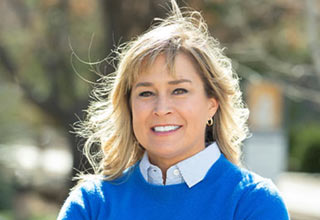
When Yavapai College Sociology Professor Dr. Jennifer Jacobson began teaching at the college in 2007, she had more students than today who came to the Prescott area to seek sobriety and then remained in the community to pursue their education.
“What’s special about community colleges is that we attract students of all social classes and educational backgrounds,” Dr. Jacobson said. “It means that we have students who are sitting next to classmates who have very different backgrounds. It leads to dynamic class discussions.”
Dr. Jacobson said that Sociology is the scientific study of the groups we belong to—those people choose and those they didn’t get to choose. Groups that include criteria such as where we were born, what social class we were born into, and our religion. She said that understanding how our group memberships shape us, and how we in turn shape those around us, is imperative if we’re going to live and work together peacefully.
Dr. Jacobson begins each semester by defining social location. Social location refers to all the things that socially constitute an individual. Specifically, she asks her students such questions as “Did you grow up in poverty or was your family wealthy? Did you grow up in a religious household? Did you speak a language other than English in your home? Did you move around a lot? Were you in the military?” She said that one’s location within society is shaped by one’s experiences. It's also shaped by things one can’t control, like age or race.
“I then read the students an excerpt from the book Unfair: The New Science of Criminal Injustice,” Dr. Jacobson said. “The excerpt focuses on a police officer who flashes his lights at a car going 53 in a 35. The car speeds away. The police officer chases. The car goes faster. Eventually, the police officer is given the okay to PIT the fleeing car.”
“The police officer taps the back of the fleeing car with the police officer's car, Dr. Jacobson said. “The fleeing car spins out of control and goes down a steep embankment. The driver is paralyzed. The driver sues. Long story short, I ask my students who was more at fault for the hazards the chase posed? The students' social location is a very accurate predictor of how they answer.”
Another important concept is social capital, Dr. Jacobson said. Social capital is like a resource. It's the people that one knows and the information that one has to help navigate an institution. Dr. Jacobson said that students may not know when registration for the next semester starts but they know someone who knows. That's the sort of social capital that she can share with them.
“Over the past few years, our partnerships with the local high schools through the Early College program means I have more and more young students,” Dr. Jacobson said. “And, because the Athletics Department is recruiting more international students, I have classrooms full of a wider variety of people.”
“I have returning parents, international students, veterans, and high school-aged students,” Dr. Jacobson said. “Some students are shocked that anyone could blame the police for just doing their jobs. Other students are shocked that the police used such an aggressive tactic when they had the license plate number and could've easily arrested the speeder later.”
Another exercise Dr. Jacobson employs with her students involves her arranging them in groups and giving them various hypothetical problems, like “Who would you call if your car broke down but you're short on money? Or who would you ask for help if you needed childcare?”
The students are asked to share real, living people who could possibly help. Dr. Jacobson said that this demonstrates social capital and the concept of the "strength of weak ties." She said that it's often a friend of a friend who helps someone get a job or is willing to tutor them in math.
“Sociology is the study of human society,” Dr. Jacobson said. “If you plan to work with humans, then Sociology will benefit you. Students who earn a bachelor’s degree in Sociology often work for non-profits—I worked for the YMCA back in the day—they collect statistics for all types of businesses and government agencies, they go on to law school, or secure a master’s degree in social work, and we teach.”
Dr. Jacobson shared some advice for all students, regardless of their academic path. She said that toward the end of the semester, some students will come to their professors to ask for help or extra credit.
“To the students who find it very difficult to ask for help, fake it ‘til you make it,” Dr. Jacobson said. “Your professors want to help you. We aren’t the best at determining who needs a little extra help from us. We rely on students who speak up. So, to those students who are shy or just don’t feel comfortable asking for help, fake it ‘til you make it. Pretend you’re the loudest, boldest, person you know and reach out to your professors.”
Yavapai College operates seven campuses and centers throughout Yavapai County and offers over 100 degrees and certificates, four baccalaureate degrees, student and community services, and cultural events and activities. To learn more about Yavapai College, visit www.yc.edu.